
-
Regular price $126.00Regular priceUnit price per
$180.00Sale price $126.00 -
Regular price $119.00Regular priceUnit price per
$170.00Sale price $119.00 -
Regular price $126.00Regular priceUnit price per
$180.00Sale price $126.00 -
Regular price $119.00Regular priceUnit price per
$170.00Sale price $119.00 -
Regular price $126.00Regular priceUnit price per
$180.00Sale price $126.00 -
Regular price $126.00Regular priceUnit price per
$180.00Sale price $126.00 -
Regular price $126.00Regular priceUnit price per
$180.00Sale price $126.00 -
Regular price $126.00Regular priceUnit price per
$180.00Sale price $126.00 -
Regular price $119.00Regular priceUnit price per
$170.00Sale price $119.00

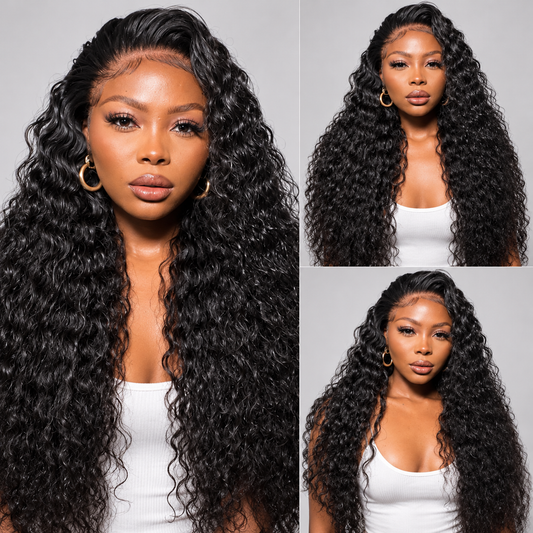

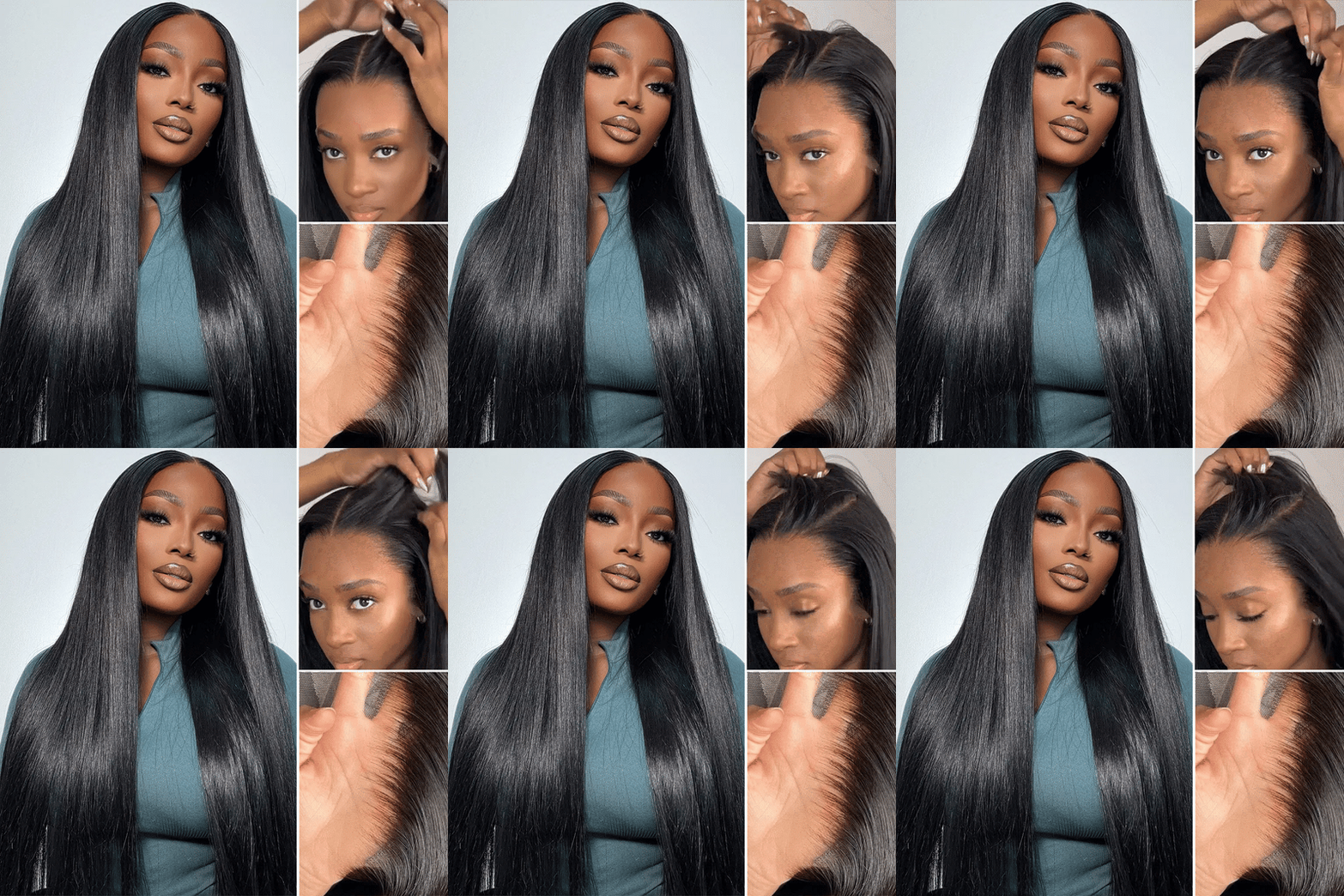

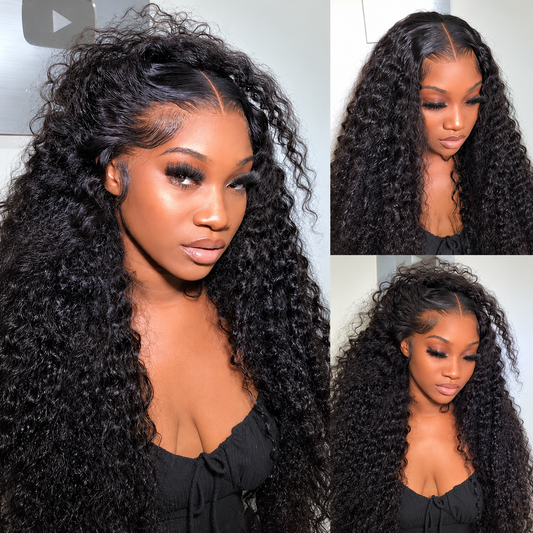

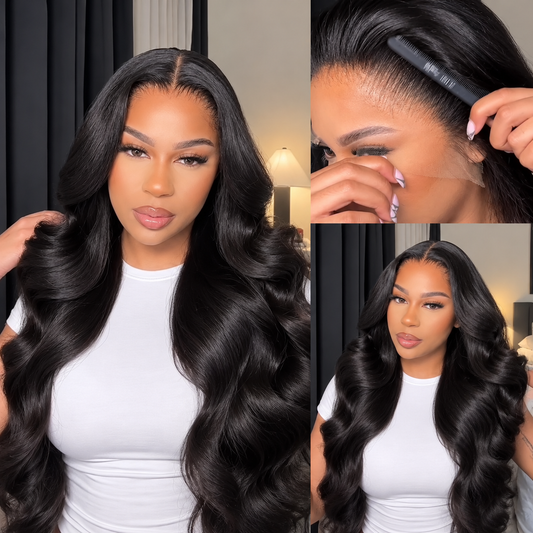

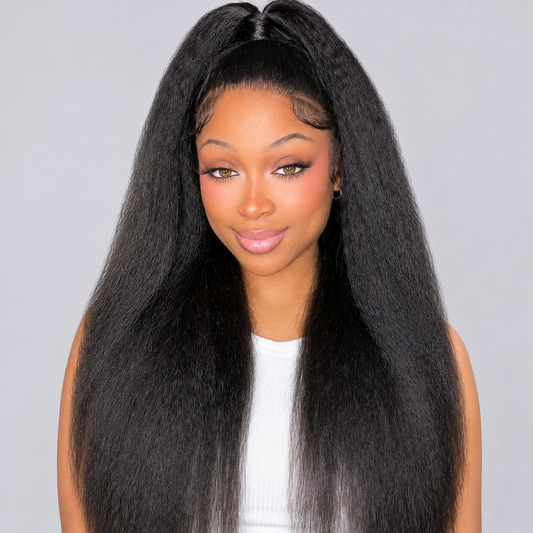


A 13x4 lace front wig is the middle of the frontal range. Thirteen inches of lace runs ear to ear across the hairline, four inches runs back over the crown. That four inches is enough for a centre part and for a side part placed anywhere within the middle of the head. It is not enough for a deep side part that sweeps out toward the temple.
Nine units here, all 100% human hair, all HD lace, from a 14-inch straight at 220% density to 32 inches at 300%. Length runs 14 to 32 inches. Every one of them offers pre-cut lace as an option, and five carry the Lagos hairline specification.
13x4 lace front wig: what four inches of depth buys
Parting depth is the whole argument. A 13x4 gives you four inches measured back from the hairline. A 13x6 gives you six. A 6x6 closure gives you six as well, but only six across instead of thirteen.
Four inches covers the part you actually make. A centre part sits at zero depth. A side part sits one to two inches off centre. Even a fairly strong side part — the kind placed above the arch of the brow — lands inside three inches. What four inches does not reach is the deep side part that begins near the temple and runs diagonally back, the style that needs six.
The practical gain from stopping at four is weight and heat. That is two inches less lace bonded or taped to your forehead, two inches less mesh trapping warmth, and a front edge that is easier to get flat because there is less of it to lay down. If you have worn a 13x6 and found the front heavy in summer, this is the same coverage with the excess removed.
13x4 lace frontal wig: seven textures across nine units
The range is wider than the count suggests, and no two units here share the same combination of texture and hairline finish.
Straight and body wave are the two anchors. The straight silky and the body wave are the two plainest builds, and both are the versions to choose if you want the lace to disappear and nothing else to draw the eye.
Water wave and deep wave are for definition. The water wave holds a wet, springy pattern that survives humidity better than body wave; the deep wave is tighter and reads fuller at the same density.
Kinky straight is the texture that looks like blow-dried natural hair rather than like a wig. It has bulk without curl, which is why it suits 300% density better than the smoother textures do.
Lagos hairline accounts for five of the nine: straight, curly, kinky curly, and kinky straight, plus one melted-hairline kinky straight. The specification is a natural black colour and a hairline finished to look unretouched — the small irregularity at the edge that a hard line of knots never has.
13x4 density: 220% and 300%
Two densities, and the difference between them is invisible at short lengths and obvious at long ones.
Up to about 20 inches the two densities look nearly the same on the head, so there is no reason to take 300% unless you prefer a heavier fall. Past 24 inches the difference becomes plain, because 300% at that length is a genuinely different amount of hair — roughly a third more — and it shows at the ends rather than at the lace.
Where 300% makes the difference: any length past 26 inches, where 220% starts to look thin at the ends, and kinky straight, where the texture needs bulk to read as volume instead of fluff. Where it is not: a 14 or 16 inch unit worn flat and sleek, where the extra density only adds weight at the crown.
Pre-cut lace: yes or no
Every unit in this collection offers both. Pre-cut means the lace in front of the hairline has already been trimmed back to the knots. You put the unit on and go; there is no trimming step and no risk of cutting into the hairline.
Not pre-cut means the excess lace is still there. You get a margin to work with — useful if your hairline sits unusually high or low, or if you want to shape the edge to your own forehead rather than accept a standard curve. What it takes is a pair of sharp scissors and about ten minutes, done with the unit on your head, a few millimetres at a time.
Take pre-cut for a first unit, or if you wear the hairline exposed and want the edge tight to the knots. Take uncut if you have a professional who shapes it for you, or if you have been unhappy with standard hairlines sitting in the wrong place.
HD lace across all nine
Every unit here uses HD lace — a finer mesh with smaller, less visible knots than standard lace. On a 13x4 the front edge is the whole point of the purchase, so there is no standard-lace option in the collection, and no reason to look for one.
Two things HD changes in use. It is more fragile: it tears if you pull the unit on by the front edge, and it does not tolerate acetone-based adhesive removers. And it is matched to lighter scalp tones — on deeper skin tones a transparent lace often blends better than HD, which is worth knowing if you are choosing between this collection and a unit listed as transparent.
Why the Lagos hairline is specified on five of the nine
Five of the nine are Lagos units, and they are built to a hand-finished hairline rather than the standard moulded one: the knots are bleached and the lace is cut back further, so the edge sits flatter against the skin. It is the specification to choose if a visible hairline is the thing that has put you off lace fronts before.
What it buys is a hairline that does not look factory-cut. Standard hairlines are dense right to the edge and even along it; Lagos units thin slightly toward the front and leave tiny gaps between the knots, so the edge reads as skin with hair growing out of it rather than as a line. On a natural black unit with no colour to distract the eye, that difference is the whole illusion.
If you wear the hair pulled back off the forehead, take a Lagos unit. If you wear a fringe or a side sweep that covers the front edge, save the specification and take a standard HD unit instead — you will not see the difference.
First wear, then care
- Test the fit before cutting anything. The front edge should sit at your hairline, not above it; a unit sitting too high is the most common reason a lace front looks wrong.
- On a glueless unit, set the strap so the front does not lift when you raise your eyebrows. That is the load test.
- Trim the lace in small passes, with the unit on. Leave about 3mm in front of the knots; cutting flush invites the knots to shed.
- Wash every 10 to 15 wears with sulfate-free shampoo. Keep conditioner off the lace and off the knots.
- Detangle from the ends up, on a unit that is damp and supported — never brush a dry 300% unit from the crown down.
- Heat below 180°C / 350°F. Colour is possible on all nine; bleaching is a professional job on HD lace.
- Store on a stand or in a satin bag, with the lace flat. Folded lace creases and a crease does not come out.
If four inches of parting feels tight, the 13x6 collection adds two inches of depth for a deep side part. If you would rather have less lace on the forehead altogether, the 9x6 skin-like closure covers the centre only and leaves your temples bare.
13x4 Lace Frontal Wig: frequently asked questions
What is the difference between a 13x4 and a 13x6 lace front wig?
Depth. Both run 13 inches ear to ear, but a 13x4 has four inches of lace back over the crown and a 13x6 has six. The extra two inches are what allow a deep side part placed close to the temple; a 13x4 handles a centre part and any side part inside about three inches.
Is a 13x4 lace front wig glueless?
Every unit here can be worn glueless with an adjustable strap, and the collection is built around that. Adhesive is optional — it gives a flatter front edge and a longer hold, at the cost of fitting time and cleanup.
What affects the price of a 13x4 lace front wig?
Length and density. Up to about 20 inches the two density options carry a similar amount of hair; past 24 inches the difference in hair volume widens quickly, which is what shows at the ends on long units.
Should I choose pre-cut lace?
Take pre-cut for a first unit, or if you wear the hairline exposed and want the edge tight to the knots. Take uncut if your hairline sits unusually high or low, or if a professional shapes it for you — you get a margin to work with instead of a fixed curve.
What is a Lagos hairline?
A finish where the hairline thins slightly toward the front and leaves small gaps between the knots, so the edge reads as skin with hair growing out of it rather than as an even factory line. Five of the nine units here carry it, at the same price as the standard finishes.
Can a 13x4 lace front be worn in a high ponytail?
A low ponytail and a half-up style, yes. A high ponytail, no — the back of a 13x4 is a solid cap, so the nape hairline is not covered. For anything above ear height, look at a 360 lace wig instead.