
-
Regular price $112.00Regular priceUnit price per
$160.00Sale price $112.00 -
Regular price $112.00Regular priceUnit price per
$160.00Sale price $112.00 -
Regular price $124.00Regular priceUnit price per
$177.14Sale price $124.00 -
Regular price $124.00Regular priceUnit price per
$177.14Sale price $124.00

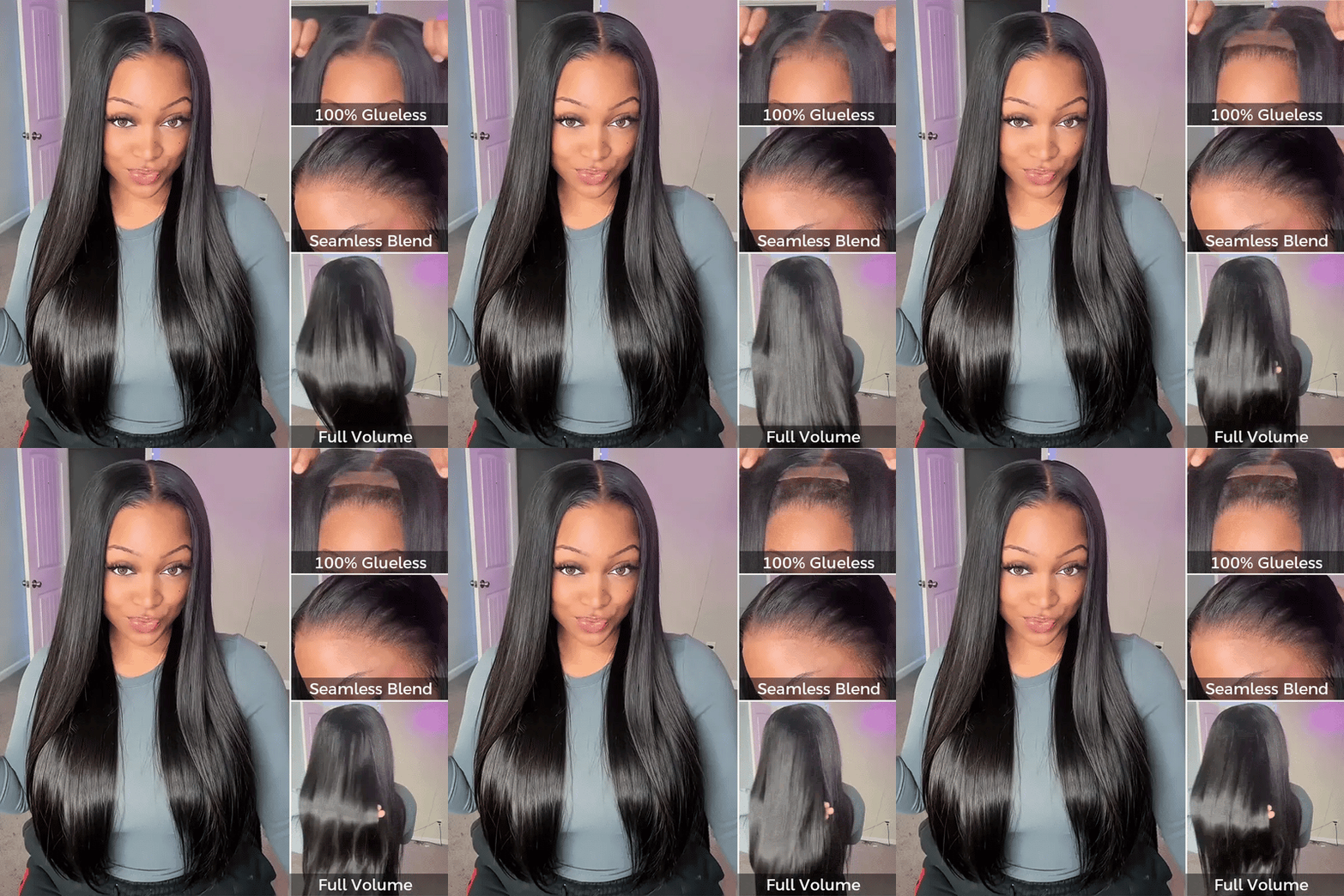

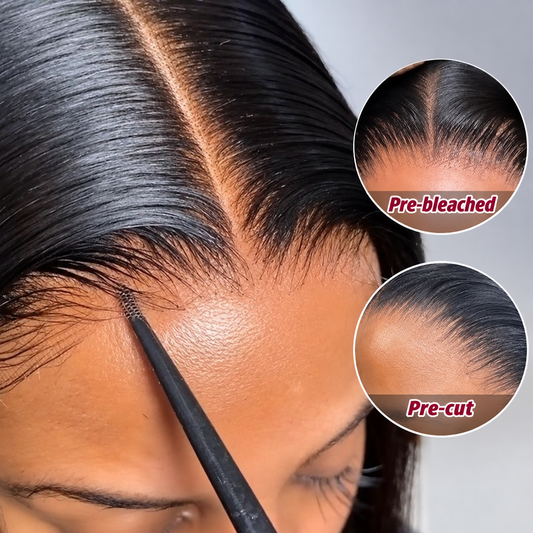


A 9x6 is the closure size that sits between a 6x6 and a full frontal, and it exists to solve one specific problem: a 6x6 stops too far inboard. Nine inches across reaches from temple to temple, just past the outer corner of the brow. Six inches back covers the crown. What it does not do is run behind the ears.
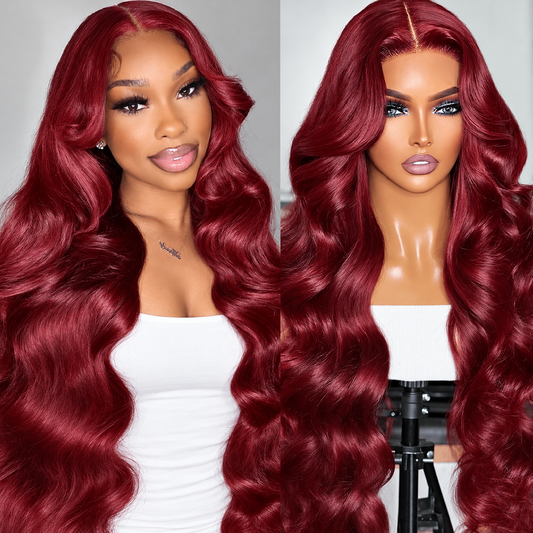
Four units here, 14 to 30 inches, 180% or 220% density, all HD skin-like lace and all pre-cut. Straight and body wave in natural colour, plus a 1B/27 honey blonde highlight and a 99J burgundy.
9x6 skin-like lace: where it sits on the head
The three closure sizes differ by inches of coverage, and the difference decides which styles each one can carry.
| Size | Across | Depth | Reaches | Most useful part |
|---|---|---|---|---|
| 2x6 | 2 in | 6 in | Centre strip only | Centre, fixed |
| 6x6 | 6 in | 6 in | Inner brow to inner brow | Centre, slight side |
| 9x6 | 9 in | 6 in | Past the outer brow | Full side part |
| 13x4 | 13 in | 4 in | Ear to ear | Deep side part |
The extra three inches over a 6x6 are what let a real side part work. On a 6x6 the lace ends around the inner brow, so a part placed further out sits on the cap rather than on lace — you see a ridge instead of a parting. Nine inches carries the part past the outer brow, which is where most people actually put it.
What nine inches avoids is the ear. A 13x4 has to be laid down in front of the ear, along the temple, over the sideburn area — the hardest edge on the head to make convincing, because the skin there moves every time you talk or smile. A 9x6 stops before that. You keep your own temples and sideburns, and you never bond lace to a moving surface.
Skin-like HD lace, and why it is not the same as HD
All four units are listed as 9x6 skin-like HD lace. The two terms are related but not identical, and the difference shows up at the hairline.
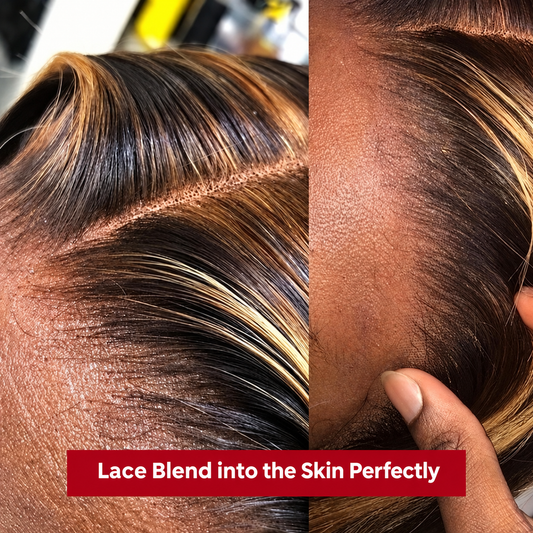
HD is a fine mesh with small knots. It disappears better than standard lace because there is less material to see through and the knots cast less shadow. Skin-like goes a step further: the mesh is thinner, softer, and tinted so that it reads as scalp rather than as a transparent film. On a part, a skin-like base shows the pale line of a scalp between two sections of hair. A standard HD base shows a faint grid if you look closely, which is the difference a 9x6 skin-like unit is charging for.
In use, skin-like is the more fragile of the two. It tears more easily, it does not tolerate rough handling at the edge, and it discolours if you leave adhesive on it. What it buys is a part that does not need powder, concealer or a tinted spray to look real. On a unit with a full side part — which is exactly what this size is for — that is the entire illusion.
All four arrive pre-cut, meaning the lace in front of the hairline has been trimmed back to the knots. There is no trimming step and no chance of cutting into the hairline.
The four units
9x6 HD lace straight is the base unit: sleek, silky, natural colour, cut for a flat finish. On a straight unit the part is the feature, so the skin-like base is doing the most visible work here. This is the one to take if you want the hairline to carry the whole illusion.
9x6 HD lace body wave is the same build with movement. Body wave hides a slightly imperfect part better than straight does, because the wave breaks up the line of the parting. If this is a first unit and you are not confident about placement, the body wave is more forgiving.
1B/27 honey blonde highlight is the colour build: 1B is an off-black base and 27 is a honey blonde, and the extra specification is in the colour work rather than in the lace. The highlight is applied in sections, so the part line shows alternating dark and light — which is the most convincing thing a skin-like base can do, because the eye reads the colour change at the part as scalp with hair falling either side of it.
99J burgundy body wave follows the same logic. 99J is a deep red-burgundy — dark enough to wear to work, red enough to read as a deliberate colour. On a burgundy unit the skin-like base has to be matched carefully: a pale base under dark red hair shows as a bright line. Beluck tints the base to match, which is why the colour units are matched rather than simply assembled.
9x6 density and length, 14 to 30 inches
Two densities, 180% and 220%. Up to 22 inches they read almost identically on the head. Past that the difference opens up: at 24 inches 220% keeps the ends from thinning, and at 30 it is the difference between a full hem and a tapered one.
Take 180% at 14 to 20 inches. The skin-like base is the purchase, and at short lengths the density does not change how the hairline reads. Past 26 inches, 220% keeps the ends from looking thin, and the extra hair is doing visible work at that length.
Length matters more here than on a frontal for a simple reason: a 9x6 is often worn up or half-up. Past 26 inches a half-up style puts a lot of weight on a closure that is only nine inches wide, and the front edge lifts. If you plan to wear it up, stay at 20 to 24 inches.
Glueless, and what it means on a closure
All four are listed as glueless, held by an adjustable strap or an elastic band rather than adhesive, and all four are pre-cut.
On a closure, glueless is close to a free lunch. There is no ear-to-ear edge to lay down and no temple to bond, so the work that adhesive would have done is mostly holding the front flat — which a strap at the nape does. The one thing to get right is strap tension: too loose and the front edge lifts when you raise your eyebrows, too tight and the part line distorts.
For a fuller explanation of the construction and where glue still has an advantage, see the glueless wig collection.
First wear, then care
- Set the strap with the unit on, then check the part under a bright light. A skin-like base shows a badly placed part more than any other type, because there is nothing to hide it.
- Do not trim the pre-cut lace further. It has been cut to the knots; anything more exposes them.
- Use a tinted powder sparingly on the part, not concealer. Cream products sit on the mesh and read as a patch.
- Never remove the unit by the front edge. Take it from the nape and lift it forward over the forehead.
- Wash every 10 to 15 wears with sulfate-free shampoo, and keep conditioner off the lace entirely.
- Detangle from the ends up while damp and supported. A 220% unit at 30 inches is heavy enough to stretch the base if you brush it hanging free.
- Heat below 180°C / 350°F. The colour units have been processed; avoid bleach and avoid lightening sprays.
- Store flat on a stand. A skin-like base creases if folded and the crease shows through the part.
If you want the part to move further out toward the temple, or you wear your hair pulled back off the forehead, the 13x4 frontal adds four inches of width, but puts lace in front of the ear. If a centre part is all you need, the 6x6 closure does the same job on less lace.
9x6 Skin-like HD Lace: frequently asked questions
What does 9x6 mean on a lace closure?
Nine inches across and six inches deep. The width reaches from temple to temple, just past the outer corner of the brow; the depth covers the crown. It is wide enough for a full side part but stops before the ears, so your temples and sideburns stay your own.
What is skin-like lace, and is it different from HD lace?
Related but not the same. HD is a fine mesh with small knots. Skin-like is thinner, softer and tinted to read as scalp rather than as a transparent film, so the part line looks like skin between two sections of hair. It is more convincing and also more fragile.
What affects the price of a 9x6 skin-like HD lace wig?
Colour and density. Colour units sit a step above natural black at the same length, and density adds hair volume in fixed steps up to about 22 inches, where the gap between the two options widens on the longest units.
Do all four units come pre-cut?
Yes. The lace in front of the hairline has already been trimmed back to the knots, so there is no cutting step and no risk of cutting into the hairline. Do not trim further — anything past the knots exposes them.
Can a 9x6 closure be worn glueless?
All four are built glueless, held by an adjustable strap at the nape. On a closure there is no ear-to-ear edge to lay down, so the strap does most of what adhesive would have done. The one thing to get right is tension — too loose and the front edge lifts when you raise your eyebrows.
Is a 9x6 big enough for a side part?
Yes, and that is what it is for. On a 6x6 the lace ends around the inner brow, so a part placed further out sits on the cap and shows a ridge. Nine inches carries the part past the outer brow, which is where most people actually put it.