
-
Regular price $156.00Regular priceUnit price per
$222.86Sale price $156.00 -
Regular price $156.00Regular priceUnit price per
$222.86Sale price $156.00 -
Regular price $126.00Regular priceUnit price per
$180.00Sale price $126.00 -
Regular price $104.00Regular priceUnit price per
$148.57Sale price $104.00 -
Regular price $149.00Regular priceUnit price per
$212.86Sale price $149.00 -
Regular price $156.00Regular priceUnit price per
$222.86Sale price $156.00 -
Regular price $126.00Regular priceUnit price per
$180.00Sale price $126.00 -
Regular price $139.00Regular priceUnit price per
$198.57Sale price $139.00 -
Regular price $151.00Regular priceUnit price per
$215.71Sale price $151.00 -
Regular price $156.00Regular priceUnit price per
$222.86Sale price $156.00 -
Regular price $89.00Regular priceUnit price per
$127.14Sale price $89.00 -
Regular price $89.00Regular priceUnit price per
$127.14Sale price $89.00

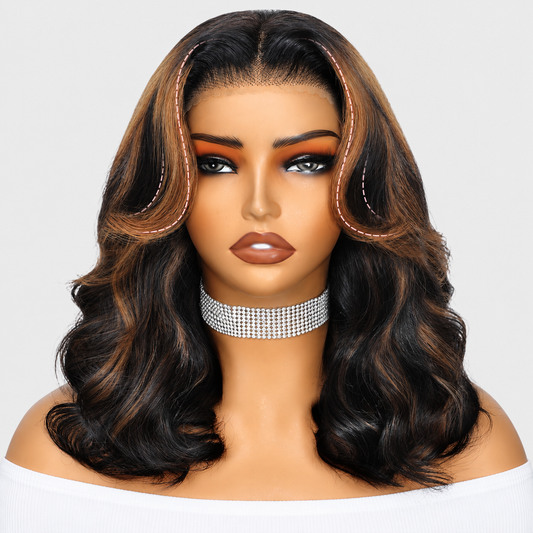


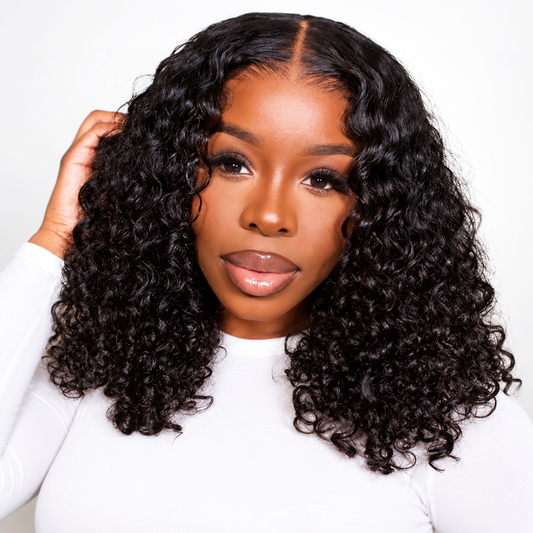

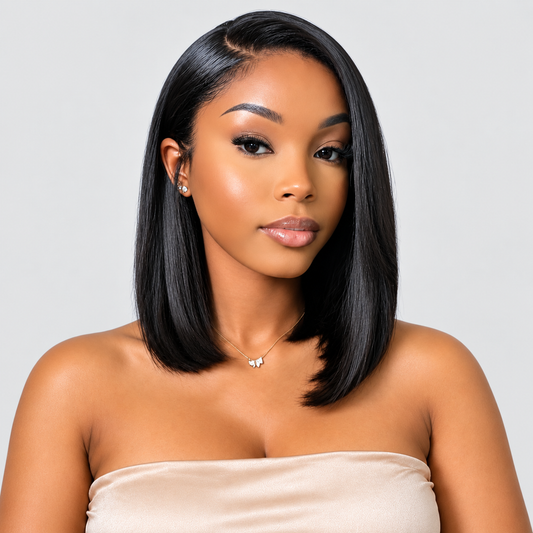
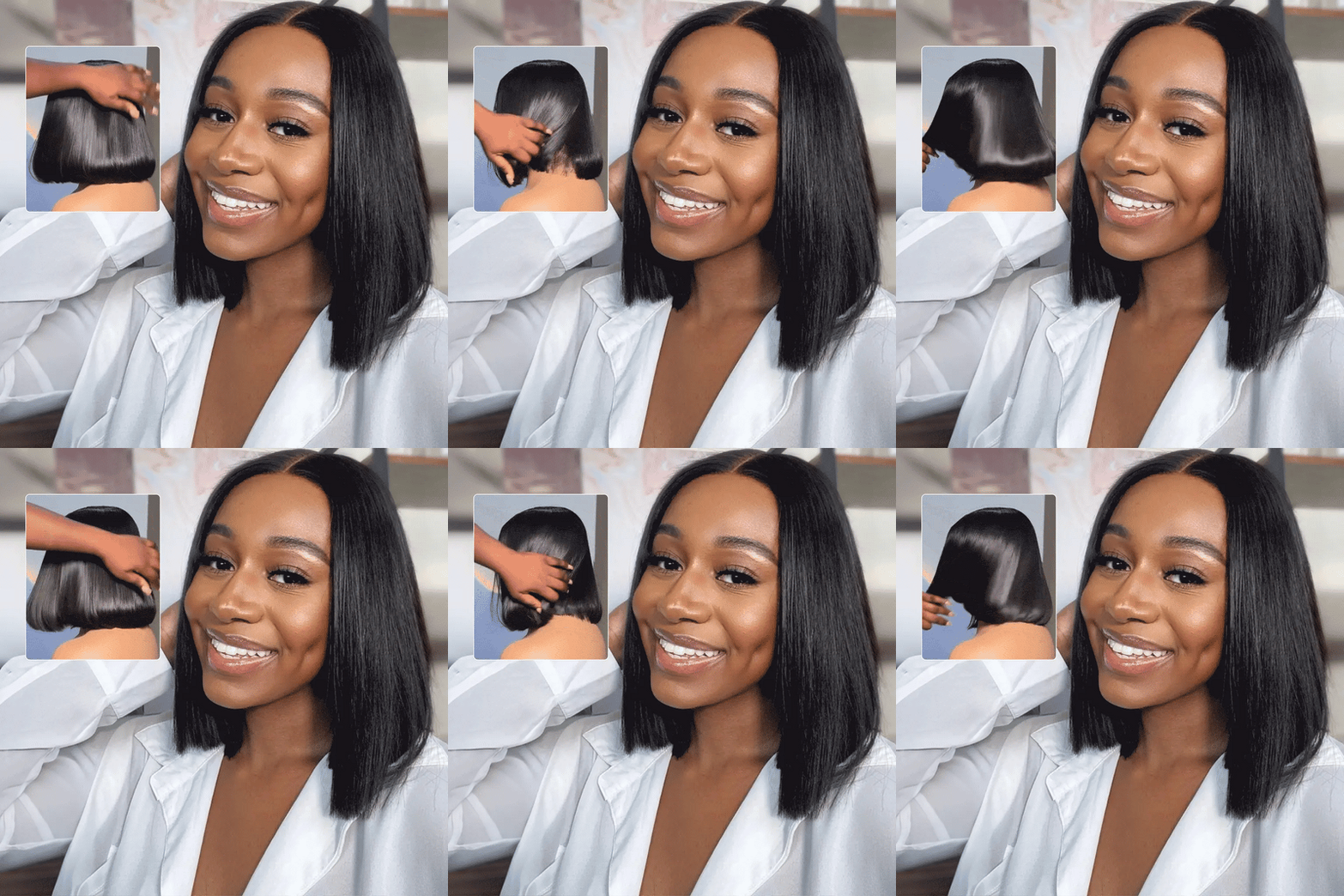

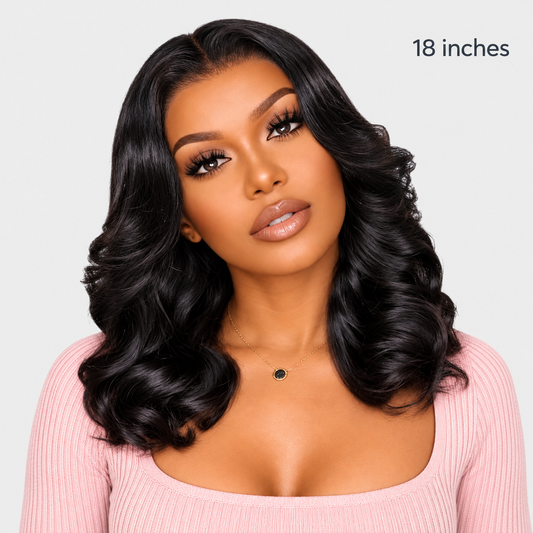


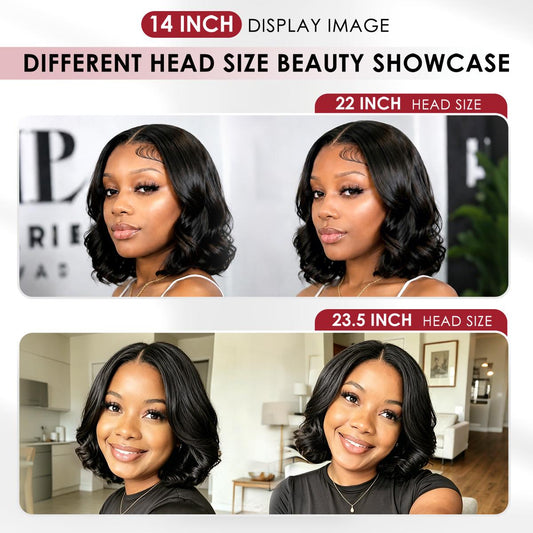

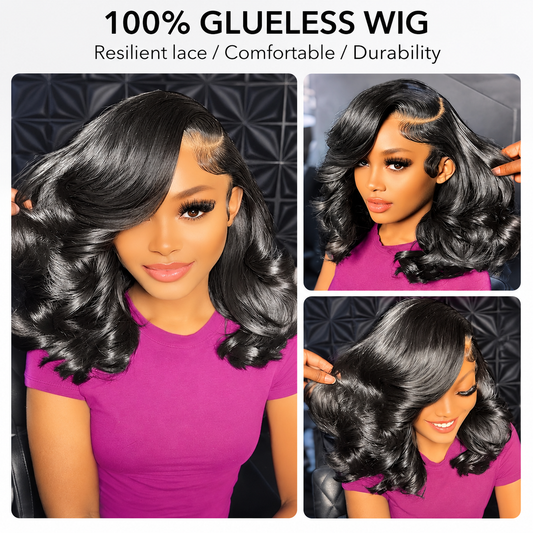

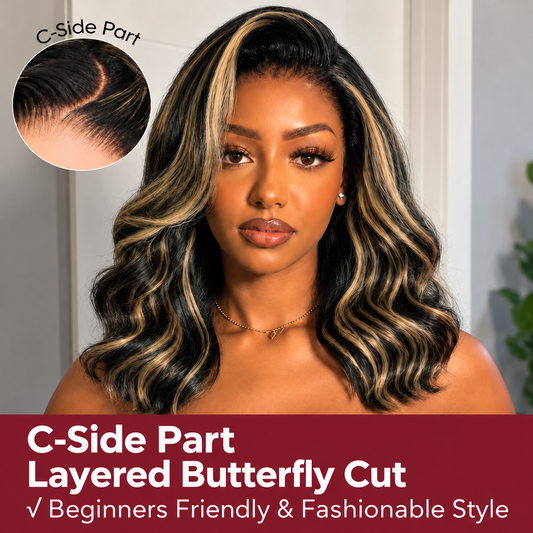


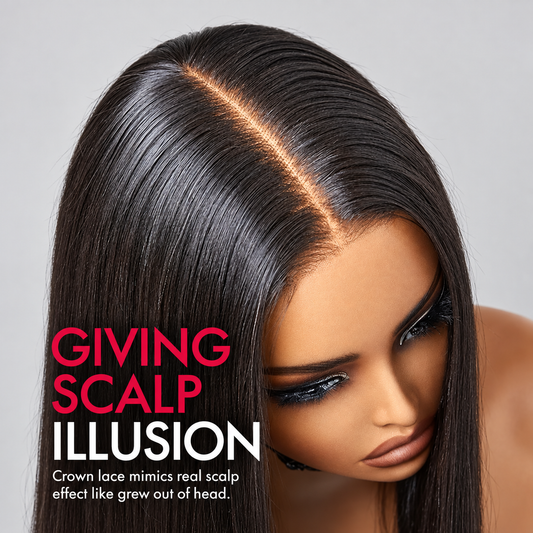

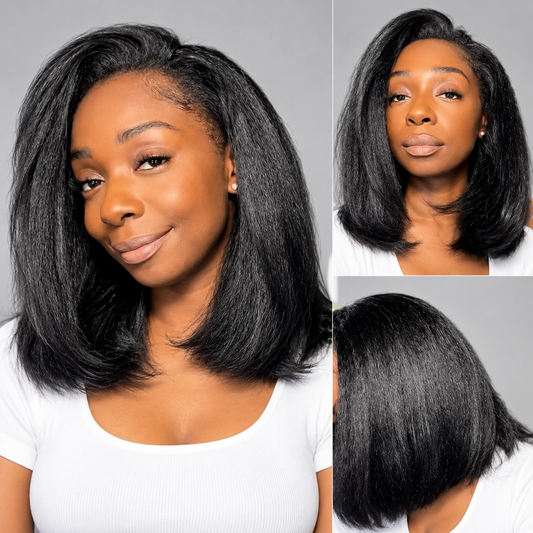
A bob wig is decided by three things: where the ends fall, whether they are cut blunt or layered, and how much hair there is. The lace underneath matters less than any of that — which is why this collection is organised by shape rather than by lace size, and why it spans four different closures, from a 2x4 to a 9x6.
Sixteen bob wigs are in stock, 8 to 26 inches, in straight, body wave, deep wave, yaki and kinky straight. All are 100% human hair. Nine are built glueless.
Where the ends fall on a bob wig
The single most useful measurement on a bob is not the inch count, it is the point on your face where the hair stops.
- 8–10 inches — at or just under the jaw. The classic short bob, and the most flattering length if you have a long neck or a narrow face. It is also the hardest to wear if your jaw is wide, because it draws a horizontal line right at the widest point.
- 12–14 inches — at the collarbone. The safest length in the collection. Long enough to tuck behind an ear, short enough to keep the shape. Most of the units here sit at 14.
- 16–18 inches — top of the shoulder. A long bob, or lob. This is where a bob stops reading as "short hair" and starts reading as "medium hair with a blunt edge".
- 20–26 inches — chest and below. Technically a long layered cut with bob proportions; here because the shape at the front is still a bob.
If you are choosing your first bob, 14 inches is the length that goes wrong least often. Going shorter is a decision about your jawline; going longer is a decision about how much styling you want to do.
Blunt, layered or curly: three bob wig shapes
Blunt cut. One length, cut straight across, no layers. The silhouette is a clean line and it needs density to hold: below 180% a blunt bob looks thin at the ends rather than sharp. The 2x4 Straight Bob and the 6x6 Straight Bob are the two plainest examples; the 2x6 Blunt Cut Bob adds a defined centre part.
Blunt with bangs. The True Scalp 2x4 with bangs covers the hairline completely. This is the option to pick if you have not yet learned to blend lace, or if you simply do not want to deal with a hairline at all. It is also the most forgiving shape on a high forehead.
Layered with curtain bangs. The largest group: the Brown Layered Bob, the 99J Layered Bob, the 1B/22 Highlight Bob and the Black Cherry Bob, all at 250%. The layers break the horizontal line at the jaw, which is why this shape is easier to wear on a round or square face than a blunt cut. Curtain bangs do the same job vertically, framing the cheekbones instead of stopping hard at the brow.
Curly and wavy. The Deep Wave Curly Bob and the Body Wave Bob, plus the 1B/30 Loose Body Wave Bob and the 9x6 Loose Body Wave Bob. Curl shortens the visual length by two to three inches, so a 14-inch curly bob sits where a 16 or 17-inch straight one does. Buy one size longer than you would in straight.
Which lace a bob wig needs
Four lace sizes appear in this collection. The difference is how much parting freedom you get at the front, and how much of your own hairline stays exposed.
| Lace | Parting | Suits |
|---|---|---|
| 2x4 | Centre, fixed | First bob, blunt cuts, bangs |
| 2x6 | Centre, slightly deeper | Defined middle part |
| 6x6 | Centre or slight side | Layered bobs, curtain bangs |
| 9x6 | Side part, deeper sweep | Side-swept bobs with volume |
A 2x4 is the simplest way into a bob and the easiest to put on: a narrow strip of lace at the front, nothing to align across the forehead. If you have never worn a lace unit, start here. The 9x6 is for someone who wants the front to sweep rather than sit — the 9x6 side-part bob is built around exactly that.
Density: why the short ones are fuller
Densities run 180%, 220%, 250% and 250% Super Double Drawn. The pattern here is the opposite of long wigs: the shortest, sharpest bobs are the fullest. The blunt cuts at 10 to 14 inches are built at 220%; the layered bobs at 250%. A 180% option exists mainly on the plainer units and on the longer lengths.
The reason is weight. On a 10-inch bob, 250% is what makes the ends fall with some swing instead of hanging flat. On a 26-inch cut, the same density would drag the whole shape down.
Glueless bobs
Nine of the sixteen are glueless, held by an adjustable strap or a drawstring rather than adhesive. On a bob this matters more than on a long unit: a short cut exposes the nape and the sides, so a cap that lifts or shifts is immediately visible. A drawstring at the nape is the more adjustable of the two — the Drawstring Bob is the clearest example, and it comes in 8 to 16 inches.
If you want the construction explained properly, including when adhesive still wins, the glueless wig collection covers it. If you want the same bob shapes with a full ear-to-ear hairline, the 13x6 lace front and 6x6 closure collections carry three of these bobs on larger lace.
Care that keeps a bob a bob
- A blunt cut lives or dies on the ends. Comb straight down while damp, dry on a stand, and do not brush the ends upward.
- Trim the ends every 8 to 10 weeks of wear. Human hair splits like your own, and a split end ruins a straight line faster than anything else.
- Wash every 10 to 15 wears. On short units this is less often than you would think — there is less hair to hold product.
- Heat below 180°C / 350°F. On a bob, a flat iron is usually all you need; curls take a wand at 160°C.
- Store it on a stand, not folded. A crease in a blunt cut does not fall out on its own.
Bob Wigs: frequently asked questions
What length counts as a bob wig?
In this collection, 8 to 26 inches. 8 to 10 inches falls at the jaw, 12 to 14 at the collarbone, 16 to 18 at the top of the shoulder. Anything past 18 reads as a long bob rather than a bob.
What is the difference between a bob and a lob?
A bob ends at the jaw or the collarbone; a lob is the same cut carried to the shoulder. The shape at the front is identical — only the length changes.
Which lace size do I need for a bob wig?
A 2x4 is the least expensive and the easiest to fit. A 2x6 gives a more defined centre part. A 6x6 allows a centre or slight side part and suits layered cuts. A 9x6 allows a side sweep with volume.
Are these bob wigs glueless?
Nine of the 16 are. They are held by an adjustable strap or a drawstring at the nape, with no adhesive.
Can I straighten a curly bob wig?
Yes, it is human hair, so a flat iron will straighten it. The curl pattern will not disappear completely and repeated straightening weakens it. If you want a straight bob, buy one: the blunt cuts here start at $127.
How do I keep a blunt cut sharp?
Comb the ends straight down while damp, dry on a stand rather than folded, and trim every 8 to 10 weeks of wear. A crease or a split end ruins the line faster than anything else.