
-
Regular price $119.00Regular priceUnit price per
$170.00Sale price $119.00 -
Regular price $139.00Regular priceUnit price per
$198.57Sale price $139.00 -
Regular price $146.00Regular priceUnit price per
$208.57Sale price $146.00 -
Regular price $99.00Regular priceUnit price per
$141.43Sale price $99.00 -
Regular price $104.00Regular priceUnit price per
$148.57Sale price $104.00 -
Regular price $146.00Regular priceUnit price per
$208.57Sale price $146.00 -
Regular price $146.00Regular priceUnit price per
$208.57Sale price $146.00 -
Regular price $146.00Regular priceUnit price per
$208.57Sale price $146.00 -
Regular price $139.00Regular priceUnit price per
$198.57Sale price $139.00 -
Regular price $149.00Regular priceUnit price per
$212.86Sale price $149.00 -
Regular price $149.00Regular priceUnit price per
$212.86Sale price $149.00 -
Regular price $126.00Regular priceUnit price per
$180.00Sale price $126.00


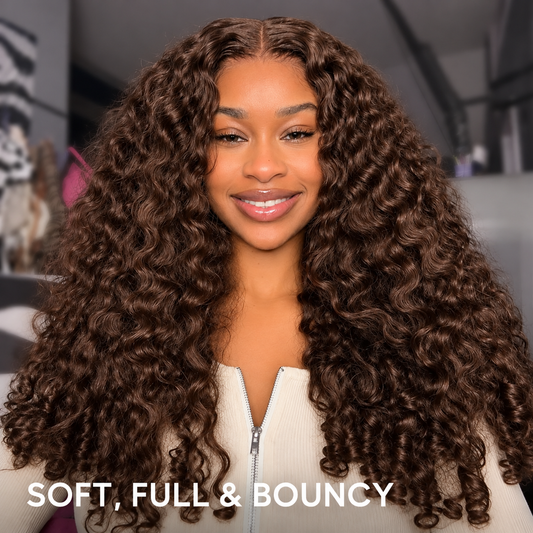
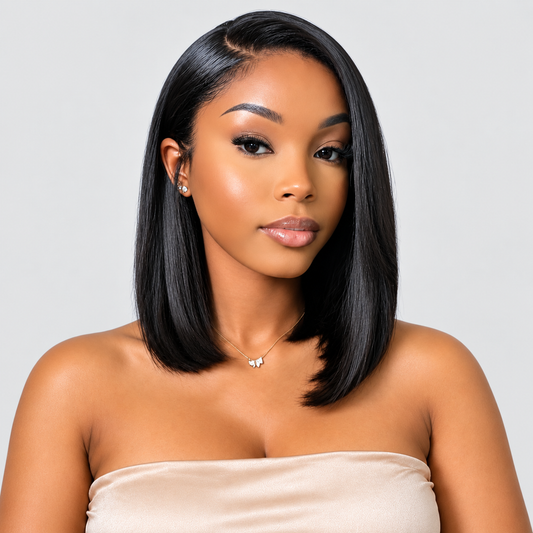
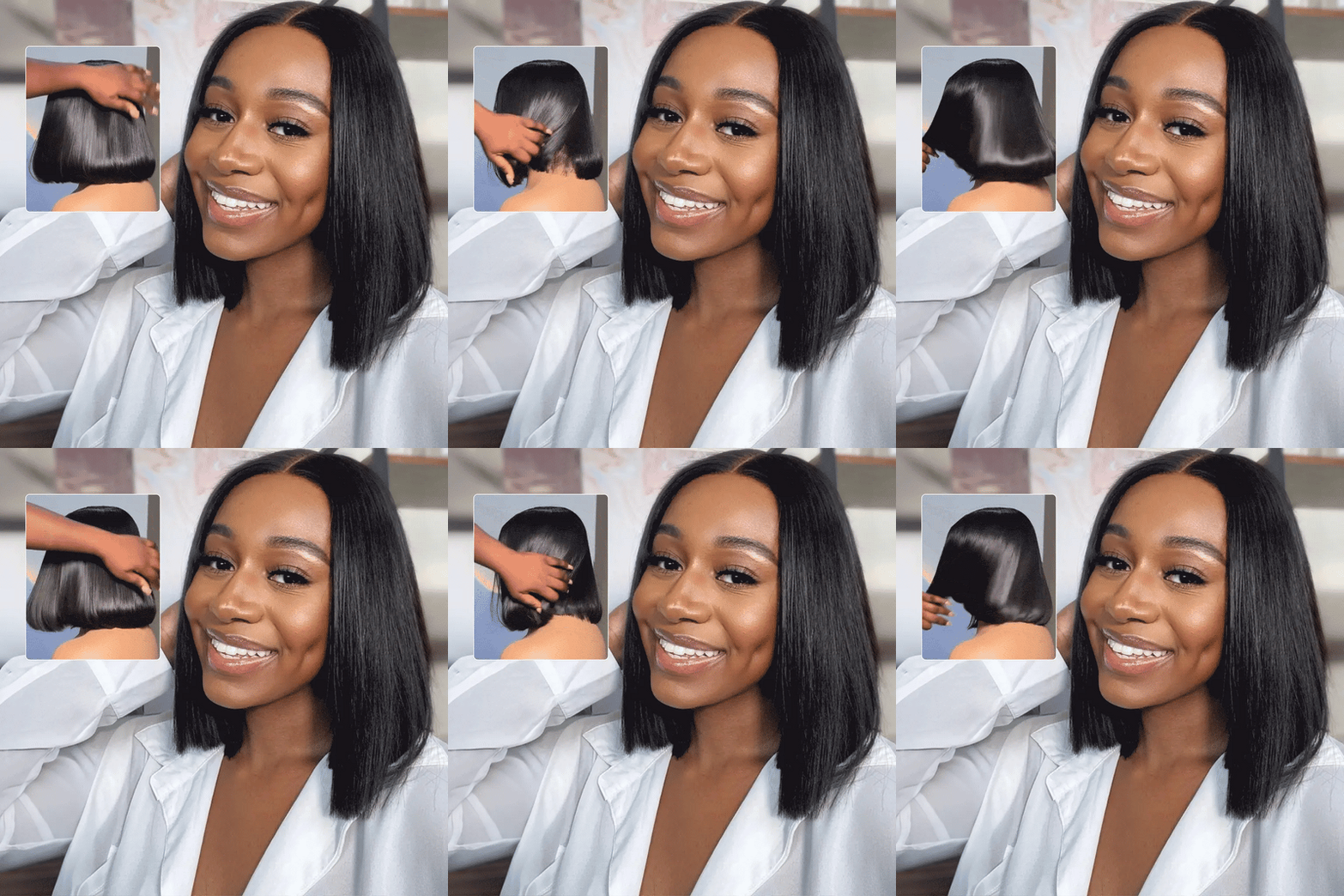
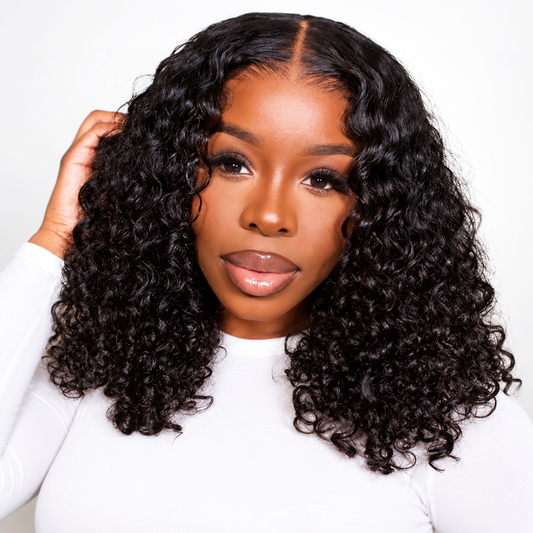


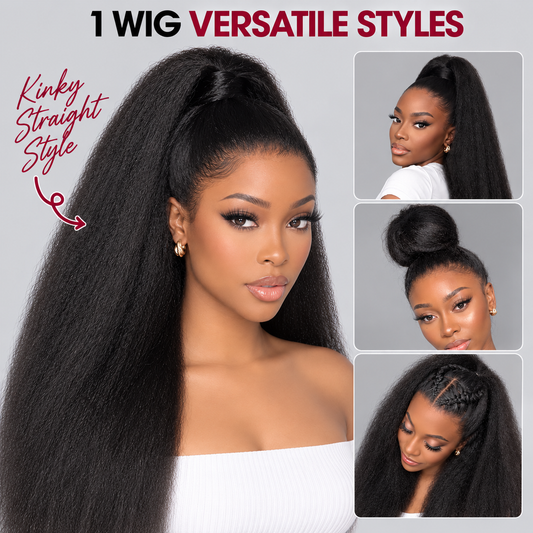

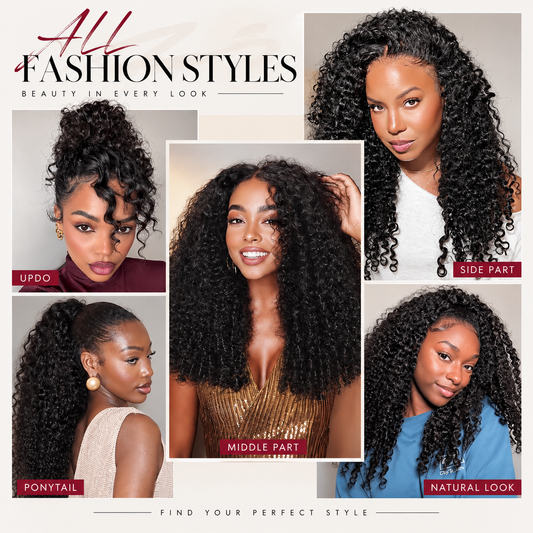

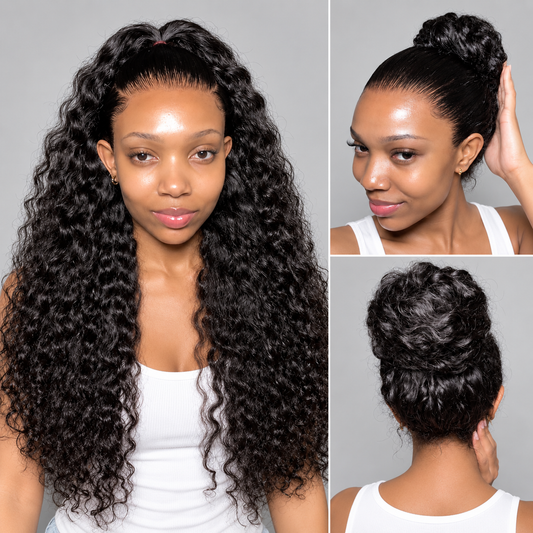
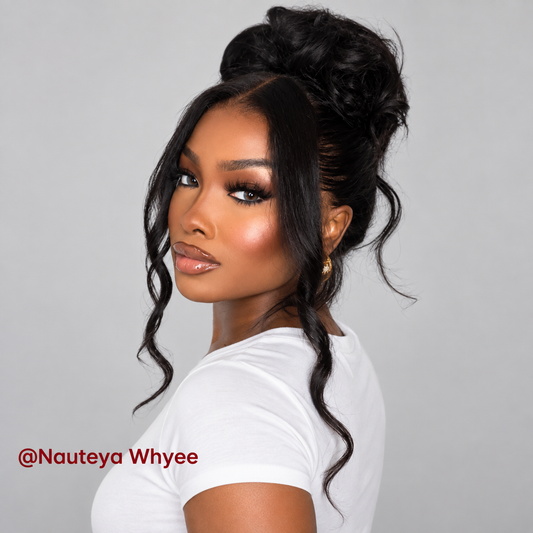
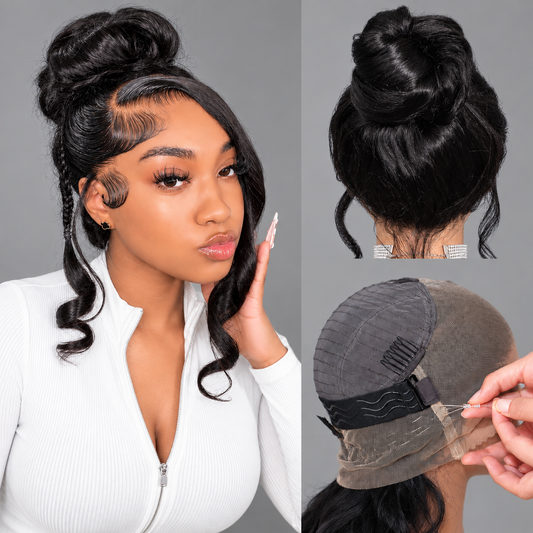

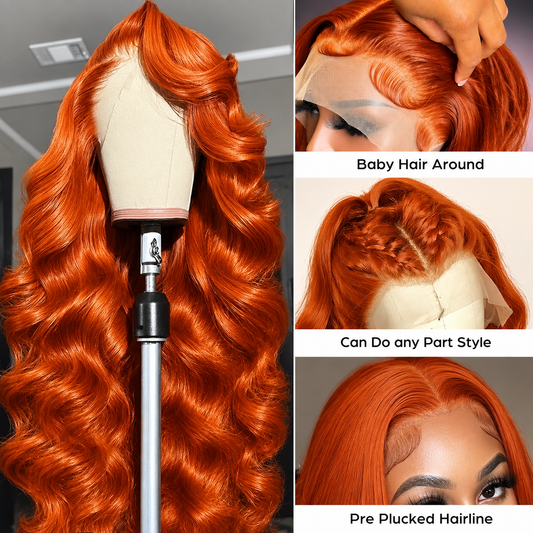

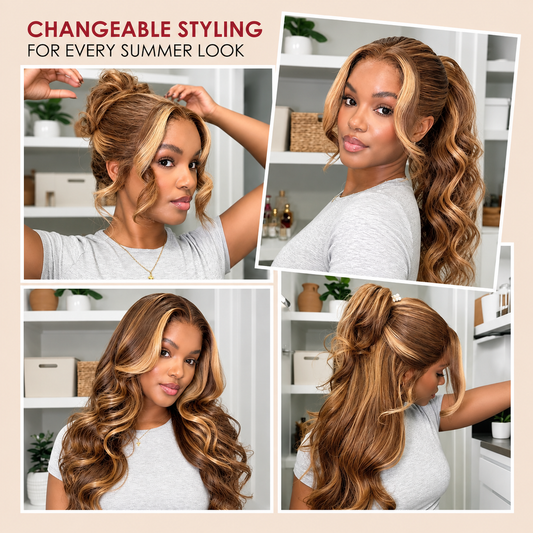
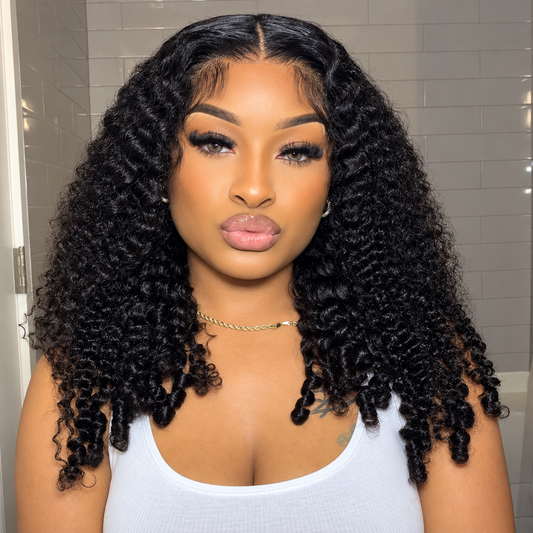

An HD lace front wig is built on the thinnest lace grade available. HD stands for high definition: the lace is finer than standard Swiss or transparent lace, it sits flatter against the skin, and once it is melted down there is no visible edge between the lace and your forehead. Every unit in this collection has HD lace across the front, on 100% human hair, and the range runs from 8-inch bobs to 32-inch units at 300% density.
What changes from unit to unit is not the lace — it is the construction the lace is mounted on, the texture of the hair, and how the unit is held on. Those three decisions are what this page walks through.
What HD lace actually changes
The difference shows up in three places. First, the knots: HD lace is thin enough that bleached knots stop reading as dots along the hairline, which is what makes a middle part look like skin. Second, the melt: it conforms to the skin with less tension, so the front does not lift when you raise your eyebrows. Third, the tint: HD lace is a neutral pale tone that disappears on light to medium skin without makeup. On deep skin tones it can need a touch of foundation on the lace, which is normal practice for any pale lace.
The trade-off is durability. HD lace is more fragile than transparent lace — it tears if you pull it taut instead of laying it down. If this is your first lace front, handle the front edge with the flats of your fingers rather than the tips of your nails, and store the unit on a stand rather than folded.
Four constructions, one lace grade
The HD lace front wigs in this range are built on four different caps, and the right one depends on how you part and how you wear your hair up.
The 13x6 front gives you six inches of lace running back from the hairline, which is what a deep side part needs. Most of the collection sits here: the body wave, water wave, loose deep, deep wave, springy curly and burmese curly builds, plus the straight units and the colour work. The 13x4 front covers four inches of depth — enough for a centre part or a moderate side part, on a lighter cap, with the silky straight and kinky straight builds. The 13x4 units here include the Lagos hairline builds, where the hairline is pre-shaped and pre-plucked to be worn straight out of the box.
The 360 construction runs HD lace around the entire perimeter, so a high bun or a ponytail shows a hairline at the nape instead of a track line. Four units here are built this way, held by an Invisi Strap at the back — kinky straight, burmese curly and deep wave among them. And the bob units are short-cut 13x6 builds — drawstring bob, deep wave curly bob and body wave bob — where the HD front matters most, because a short cut puts the hairline at eye level.
HD lace front wig textures: from silky straight to burmese curly
The texture list is close to the full Beluck range. Straight and body wave are the two every-day builds: the straight units are cut dense and fall flat, and body wave holds a soft S-pattern that sets the standard for the rest. From there the curl tightens in steps — water wave (a wet-look pattern with shine), loose deep (a stretched S that falls heavy), deep wave (defined and bouncy), springy curly (a true spiral), and burmese curly (the tightest, with the most shrinkage and the most volume per inch).
Two kinky textures sit at the afro-textured end: kinky straight, which reads as blown-out natural hair, and kinky curly, a coarser coil that matches 4B/4C leave-out. The Lagos hairline units come in curly, kinky curly, straight and body wave — those four have the most finished hairlines in the range, with the baby hairs pre-laid.
Density: 180% to 300%
Four densities appear across the collection. 180% is a natural fullness — what grows-out hair looks like on most people. 220% is the standard for units worn with a defined part, because the extra hair keeps the parting from showing scalp through the lace. 250% sits on the bob builds, where a short cut and a patterned texture eat volume and need the extra hair to read as full. 300% is the show density: maximum fall, maximum weight, and the choice for long units past 28 inches where thin ends are what gives a wig away.
Weight follows density. A 300% unit at 30 inches is heavy on the neck by the end of a day, and it needs the adjustable straps tightened to stay put. If you have not worn a dense unit before, 220% at your chosen length is the build most people settle on.
Glueless HD lace front wigs
Roughly half the collection is built to be worn without adhesive. The glueless builds hold on with a drawstring at the nape or an adjustable strap and combs, and the HD front is pre-cut on many of them, so there is no trimming step before the first wear. The drawstring 13x6 builds — water wave, loose deep, springy curly, deep wave, burmese curly — are the ones to look at if you want a curly unit you can put on in the morning and take off at night.
The Invisi Strap 360 units are the same idea applied to the full-perimeter cap: a flat strap that sits under the hairline at the nape. No glue anywhere, and the high-bun styling that the 360 construction exists for still holds.
The trade-off with glueless is hold under sweat and swimming. A glued front does not move in water; a drawstring front will. If your week involves the gym or the pool, the adhesive route — skin bond, a lace melt spray, and a proper remover — keeps the front pinned for three to seven days at a time.
| Construction | Lace coverage | Parting | Suits |
|---|---|---|---|
| 13x6 front | 13 in wide, 6 in deep | Centre, deep side, re-partable | Most wearers; the default |
| 13x4 front | 13 in wide, 4 in deep | Centre or moderate side | Lighter cap, fixed parts |
| 360 frontal | Full perimeter | Front plus nape hairline | High buns, updos |
| 13x6 bob | 13 in wide, 6 in deep | Any, at eye level | Short cuts, low effort |
Pre-cut lace, and what it saves you
Most units here offer a pre-cut lace option: the front edge is trimmed to the hairline shape before it ships. On a raw unit, cutting the lace is the one irreversible step — cut too much and the hairline sits back from where it should, and no fix short of a new front repairs it. Pre-cut removes that step, which is why it is the default for first-time wearers and for anyone who has ruined a front before.
What pre-cut does not do is pluck the hairline or lay the baby hairs — that is what the Lagos hairline builds add on top, with the density at the front already thinned to a natural gradient.
The full range of HD lace front wigs is below. If you already know your construction, the glueless collection filters to the no-adhesive builds across every cap type, and the colored collection holds the burgundy, highlight and statement-colour units.
HD Lace Front Wigs: frequently asked questions
What does HD stand for in an HD lace front wig?
High definition. It is a grade of Swiss lace made thinner than standard or transparent lace, so the mesh is finer, the knots show less, and the front edge disappears against the skin once it is melted down.
What is the difference between HD lace and transparent lace?
Transparent lace is thicker and more durable. HD lace is thinner, lies flatter, and needs less makeup to blend on light to medium skin tones. HD is more fragile — it tears if pulled taut instead of laid down, so it suits wearers who have handled lace before or choose a pre-cut front.
Can you glue down an HD lace front wig?
Yes. Roughly half the collection is built glueless — drawstring or adjustable strap — and those units can also be glued if you want a longer hold. The rest are installed with skin bond or lace glue in the usual way, which holds three to seven days per application.
Which skin tones does HD lace suit?
HD lace is a neutral pale tone, so it disappears on light to medium skin without tinting. On deep skin tones it needs a touch of foundation along the front, which is standard practice for any pale lace and takes under a minute.
What density should I choose in an HD lace front wig?
180% reads as natural growth. 220% is the standard for a defined part. 250% sits on the bob builds. 300% is the show density for long units past 28 inches, where thin ends are what gives a wig away — and it is heavy, so the straps need tightening.
Can I dye or bleach the hair on an HD lace wig?
The hair is 100% human hair, so it lifts and takes color like grown hair. Keep product off the lace itself — bleach and dye weaken the mesh. The safest route is a strand test on hair from the nape of the cap before any full process.